


SA Air Force remembers fallen airmen
Date: 19 May 2014


By Janet Szabo
As South Africa commemorates 20 years of democracy, the South African Air Force (SAAF) has held a moving tribute to those who died in service to their country.
Speaking at the annual memorial service hosted by the South African Air Force and the Air Force Association in Pretoria at the weekend, Chief Chaplain of the SAAF Chaplain Zolani Makalima emphasised that wars still rage but with a changing pattern and character and people continue to sacrifice their lives as they fight for justice and peace. He said: “Today we remember all who have given their lives in the struggle to make the world, and especially our country South Africa, a better, a fairer and safer place.”
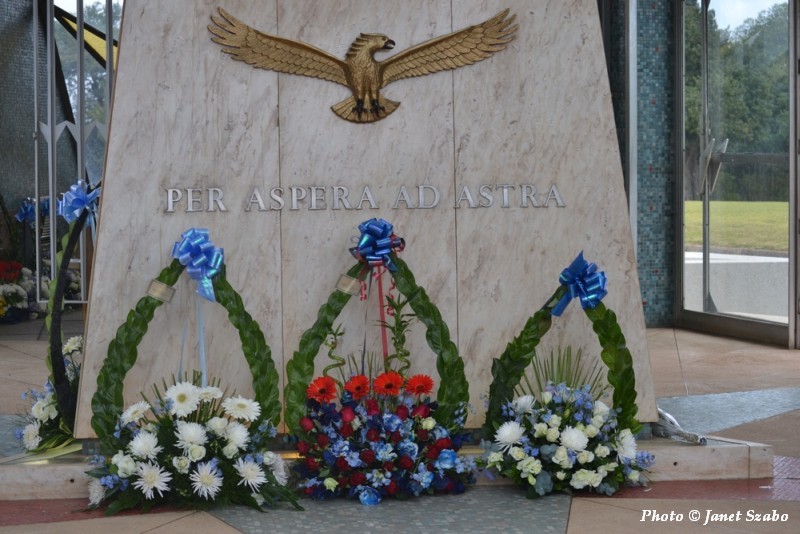
Although the country has been at peace since 1994, almost 60 members of the SAAF have lost their lives during that time. During the wreath laying, special mention was made of four members who had died in the past year. Next of kin paid tribute to Warrant Officer W.A. Borman, Airman K. Lerelau, Warrant Officer C.J. Mieny and Airman Vaugan Govender.
In the past 20 years, the SAAF has provided air support during peace-keeping operations in countries like the Democratic Republic of Congo (DRC) and Sudan, as well as during the current anti-piracy patrols by the Navy in the Mozambique Channel. Currently they are also participating in operations to combat rhino poaching as well as border patrols.
In recognition of the SAAF’s contribution in the international arena before 1994, wreaths were laid by the Korean defence attaché and former Chief of the SAAF, Lieutenant General Denis Earp on behalf of the Korean War Veterans Association. Members of the SAAF, including General Earp who was taken prisoner, served with distinction during the Korean War from 1950 to 1953. In recognition of their contribution, the Officer Commanding of 18th Fighter-Bomber Wing of the US Air Force issued the unusual policy directive that all retreat ceremonies shall be preceded by the introductory bars of the South African national anthem.
Other wreaths laid included those by the representatives of the United Kingdom, the Royal Air Force’s Association South African branch and the Royal Air Force Officers Club. In 1944 alone, in the closing stages of World War ll about 650 South Africans serving in the SAAF lost their lives mainly in the Italian Campaign and while flying supplies to the resistance movement in the Polish capital, Warsaw. The cost of the SAAF “Warsaw Concerto” was tragically high in terms of men and aircraft, but the courage and skill of the pilots and crew earned the SAAF the respect of the Polish resistance fighters.
In the same year, about 50 South Africans serving in Commonwealth air forces lost their lives. According to the SAAF Museum’s historical research officer, Colonel Graham du Toit, a large number of these were flying for tactical air forces and Bomber Command. From 1944 on, Bomber Command conducted controversial bombing raids on German cities causing high numbers of civilian casualties. But Bomber Command suffered a higher casualty rate than any other part of the British military in World War Two – 55,573 airmen were lost, with a large number of these men being lost between 1944 and 1945.
Almost two walls of the Air Force memorial contain the names of those who died during the Second World War from 1939 to 1945.
2014 also marks the centenary since the start of the First World War. Although the SAAF was only formed in 1920, at least 100 South Africans serving in Britain’s Royal Flying Corps lost their lives. During this war, several South Africans rose to prominence, including Pierre van Rynevld who went on to become one of the founders of the SAAF and was its first chief from 1920 to 1937. His ashes have been placed at the distinctive memorial on Bays Hill.
In a fitting final tribute to all the air men and women who have paid the ultimate price in service to their country, rose petals were scattered from the Museum’s vintage Allouette III helicopter over the rose garden at the memorial.
Source: SABC
