


No fuel, no flights, pilots sent home: Shortages and budget cuts push SANDF to breaking point
Date: 22 May 2026


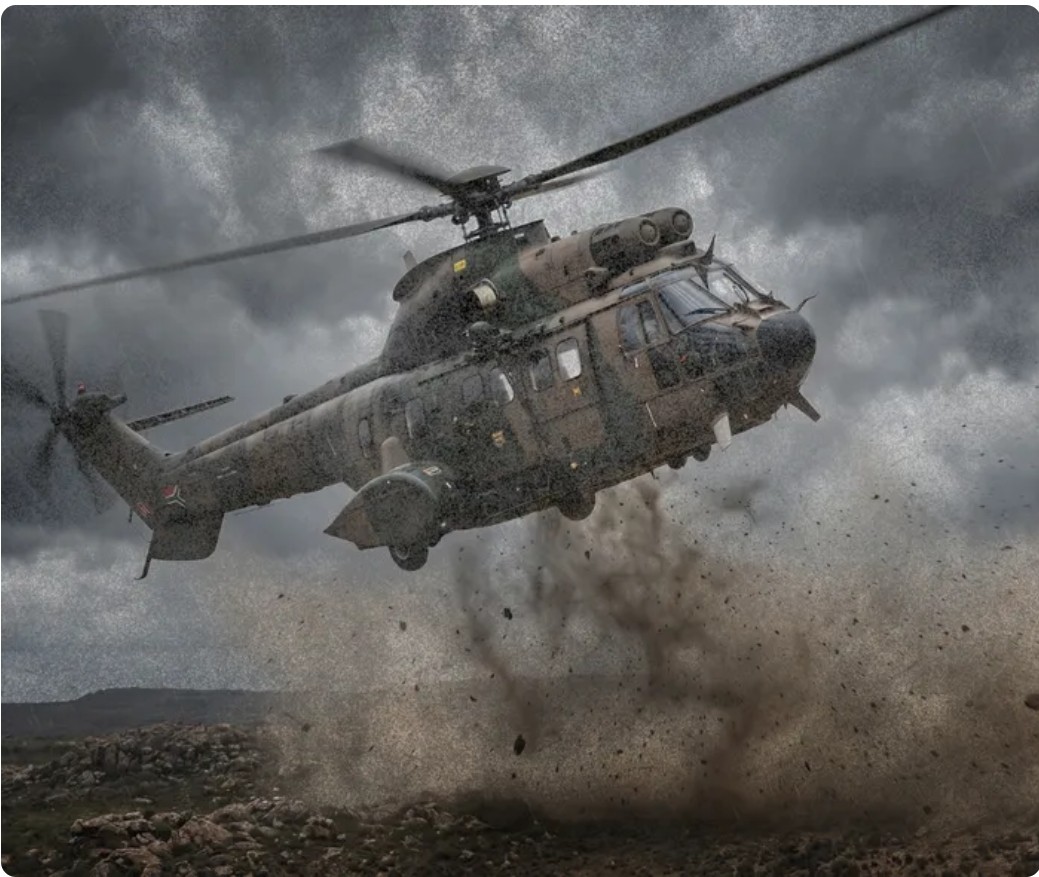
South Africa’s military air capability has suffered another major blow after the South African National Defence Force’s ageing fleet of Oryx helicopters was effectively grounded due to fuel shortages and worsening budget constraints, with insiders claiming that only one aircraft remains operational in the entire country.
The revelations come as Parliament heard fierce criticism this week over the state of the SANDF during the 2026/27 Defence Budget Vote debate, where MPs across the political spectrum warned that the country’s defence force was in visible decline.
Multiple SANDF sources told IOL that operations within the Air Force have deteriorated to the point where personnel are unable to fly because there is no Jet A1 fuel available at several bases, while some facilities are reportedly struggling even to keep generators running.
“The 17 Squadron has been closed for more than a month due to a lack of diesel for the generators. Staff check in on Monday mornings, then leave at 09h00. The rest of the time, they work from home,” one insider said.
“All the Oryx pilots in the country are in Pretoria this week for an Ops Camp, with one Oryx. The only one in the country.”
The Oryx helicopter is one of the SANDF’s primary workhorses and is used extensively for troop transport, border safeguarding, disaster relief, medical evacuation, search-and-rescue operations and support to police operations.
Sources said the fuel crisis has spread beyond Gauteng.
“Bloemfontein doesn’t have diesel or Jet A1. No flying can take place. 44 Squadron had to bring drums of diesel along from Pretoria for the bowser to be able to get fuel to get back to Pretoria,” another source said.
Another source has further indicated that at least 80% of the SAAF fleet is grounded due to various reasons, including a lack of maintenance due to budgetary constraints.
"There is also a lack of management skills, which is further impacting operations. We are lacking the ability to plan for the future and anticipate challenges and budget for them in advance," said another source.
Attempts to get a comment from the SANDF were unsuccessful. Brigadier General Selinah Rawlins failed to respond to questions sent to her and a follow-up call on the allegations.
“We have received your inquiry and are working on it,” she said during the phone call.
The allegations paint a picture of a military struggling to maintain even basic operational capability despite receiving a R57.6 billion allocation in the latest national budget.
During her budget speech in Parliament, Defence and Military Veterans Minister Angie Motshekga acknowledged severe operational and infrastructure challenges facing the SANDF, including inadequate helicopter serviceability and deteriorating military equipment.
“The South African Air Force provides essential support not only to the border area safeguarding, but also to disaster aid and relief, search and rescue, reconnaissance and rapid deployment,” Motshekga told Parliament.
“Helicopter numbers and serviceability are inadequate to sustain rapid response across domestic and national security tasks.”
Motshekga admitted that the SANDF faces a “fundamental and persistent misalignment between mandate, expectations and funding,” while the Department of Defence continues to operate under mounting financial pressure.
The Department of Defence has requested funding equivalent to 1.5% of GDP to sustain military operations, but the current defence allocation remains at roughly 0.7% of GDP.
The minister also warned that ageing infrastructure, unserviceable vehicles, deteriorating naval platforms and outdated radar systems continue to weaken the SANDF’s operational readiness.
But opposition parties said the crisis runs far deeper than the government is willing to admit.
EFF MP Carl Niehaus described the SANDF as being “in the throes of collapse.”
“These budgets represent not mere fiscal failure, but a deliberate, managed decline of our national defence capability and a shameful betrayal of the men and women who sacrificed everything for South Africa’s liberation,” Niehaus said during the debate.
“The SANDF is in the throes of collapse: R8 billion in maintenance backlogs, unfunded capabilities across air, sea and land, and yet more unauthorised expenditure looming on compensation of employees.”
Niehaus warned that unless defence spending was dramatically increased, South Africa would continue losing critical military capability.
“Without increasing the defence budget to at least 1.5% of GDP, there will be no genuine modernisation, no youth rejuvenation of the force, and no real industrialisation of the defence sector,” he said.
DA defence spokesperson Chris Hattingh said the SANDF was no longer on a “journey to greatness” but rather on “a journey of decline.”
“The Air Force cannot fly properly. The Navy cannot sail properly. The Army cannot deploy properly,” Hattingh said.
“South Africa now has a defence force increasingly unable to safeguard our sovereignty on land, at sea, or in the air.”
The Inkatha Freedom Party also raised alarm over reports of grounded aircraft and collapsing military maintenance systems.
IFP MP Russel Cebekhulu said helicopters were allegedly being cannibalised for spare parts.
“Our air force is struggling with grounded aircraft due to spare parts shortages. Helicopters are reportedly being scavenged for components simply to keep a few operational,” he said.
Military analyst Dean Wingrin told Defence Web that the budget speech failed to fully confront the seriousness of the SANDF’s operational crisis.
“The fact that South Africa can no longer support concurrent external and internal support operations says a lot,” Wingrin said.
“The time to politely ask for more funding is long past.”
The latest revelations are likely to intensify scrutiny over the SANDF’s operational readiness at a time when the military continues to assist police with internal security operations, border safeguarding and disaster response functions across the country.
The Air Force’s Oryx fleet has long been regarded as critical to those operations, particularly in remote areas where rapid deployment and air mobility are essential.
The SANDF has not yet publicly responded to the claims regarding the grounding of the Oryx fleet, fuel shortages at bases or allegations that pilots are effectively unable to operate due to budgetary collapse.
