


Dean Wingrin's view of the SANDF's budget and ability to fulfill its constitutional mandate
Date: 21 May 2026


Overview
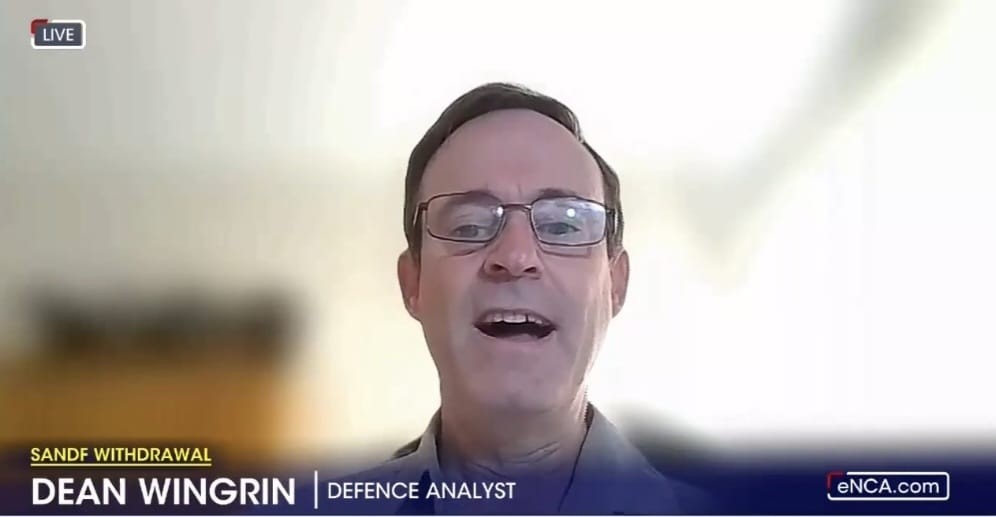
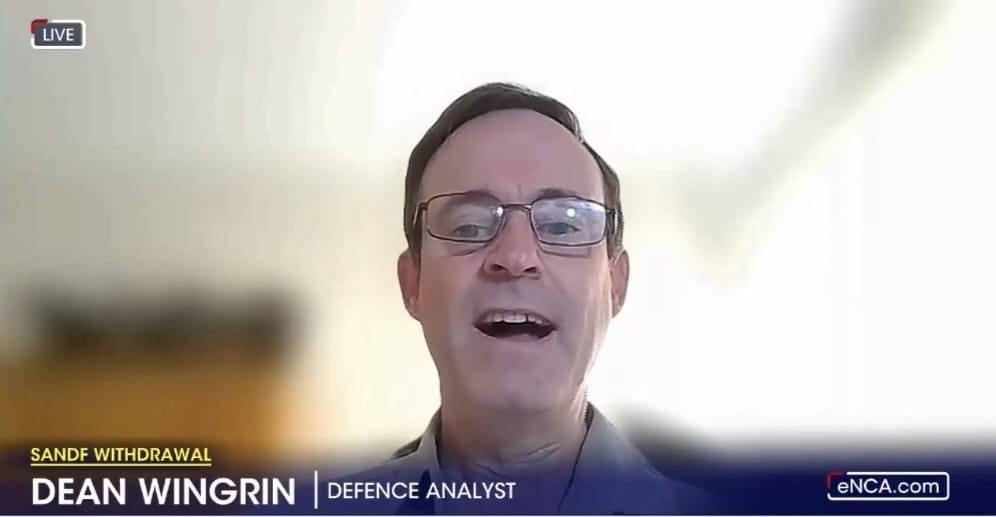
Dean Wingrin was interviewed on eNCA on Thursday morning, 21 May 2026, to discuss Defence Minister Angie Motshekga's Defence budget vote speech the previous day.
The discussion focused on South Africa’s defence funding shortfall and the strain this places on the SANDF’s ability to fulfill its constitutional mandate. Dean Wingrin argued that the current budget of R57.6 billion for 2026/2027 is far too low to sustain border protection, maritime security, air capability, and domestic support operations, especially given underfunding over the past 15–20 years.
Key Discussion Points
SANDF funding and mandate
- The SANDF’s constitutional role was framed as protecting South Africa’s territorial integrity, citizens, and residents, while also contributing to regional peace and stability.
- Wingrin stressed that South Africa cannot modernize or maintain a credible defence posture with the current funding level, especially amid instability in parts of Africa and along the Mozambique border.
- He described the budget gap as a long-standing mismatch between operational expectations and available resources.
Major capability gaps
- Navy: Under-resourced fleet, with only one frigate and two patrol vessels available to cover South Africa’s vast maritime area. Maintenance funding remains insufficient, despite a recent successful frigate deployment to India and East Asia.
- Air Force: Severe shortages in aircraft and helicopters, limiting the SANDF’s ability to support flood response and civilian emergency services.
- Army: Border protection capacity remains below target, with roughly 15 Companies deployed against a target of 23. The Army also relies heavily on reserve members.
- Equipment and infrastructure: Bases were described as dilapidated and poorly secured, with vehicles and mission equipment 30–40 years old in some cases. Soldiers are reportedly forced to buy their own boots and protective gear.
Internal support operations and budget strain
- The SANDF’s expanded domestic role — supporting police in anti-gang, illegal mining, and other stability operations — was presented as necessary but financially unsustainable.
- Wingrin said South Africa can no longer afford concurrent external peacekeeping deployments and internal support missions.
- He noted that this additional duty is placing severe pressure on personnel, equipment, and already limited funding.
- The Presidency’s estimated cost of these support operations was cited at up to R823 million until March next year, with concerns that this is being drawn from the SANDF’s existing budget.
Budget allocation details discussed
- The defence budget for 2026/2027 was cited at R57.6 billion, representing approximately 0.7% of GDP.
- The minister’s split included R37 billion for compensation of employees, roughly 65% of the budget.
- Other amounts referenced included R912 million for military veterans, R500 million for border safeguarding, R427 million for Air Force fighter capabilities, and R600 million for naval platforms.
- Wingrin argued the defence budget should be roughly double its current level and that 1.5% of GDP should be the minimum target.
Strategic outlook
- Wingrin acknowledged that defence competes with other national priorities such as health, education, and safety.
- He said meaningful increases are unlikely until South Africa’s economy improves and GDP growth (currently at 1% or less) rises significantly above current levels.
- The expectation was that a future supplementary appropriation might partially backfill SANDF shortfalls, but no immediate solution was identified.
Notable Context
- The conversation also referenced broader national security concerns, including border insecurity, cross-border crime, and the role of the defence force in supporting domestic stability.
- The discussion followed parliamentary debate around the defence budget and concerns that chronic underinvestment is eroding readiness across the SANDF.
