


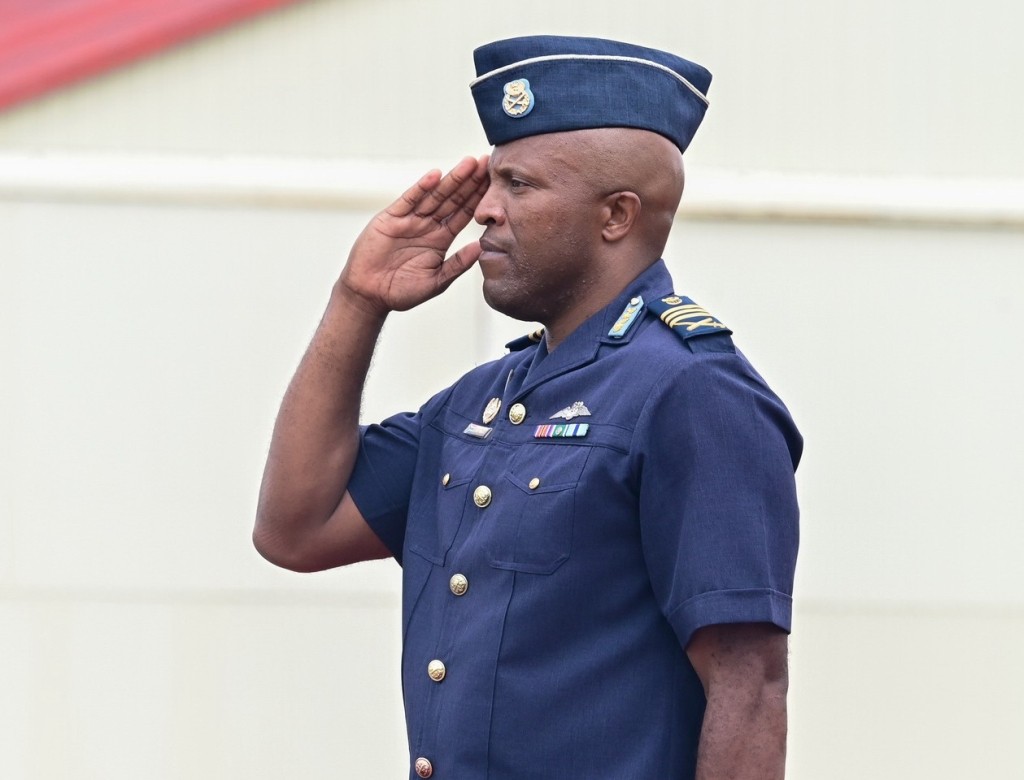
Moatshe plots a path to renew the South African Air Force
Date: 7 July 2026


The end of June saw SA Air Force (SAAF) Chief, Lieutenant General Carl Moatshe, presiding over a promised strategic work session to assess the current state of the airborne service, define its future and establish a roadmap for renewal.
Coinciding with the Rustenburg workshop, the official SAAF publication Ad Astra carried a message from the new senior officer in the Chief’s suite of offices at SAAF Headquarters, also known as Air Command, on Dequar Road, Pretoria.
His Ad Astra message, among others, informs the men and women he commands “the nature of warfare and security is rapidly evolving”.
“We are preparing for what we call the ‘future war fighter’ – airmen and women equipped not only equipped with technical expertise but also with the critical thinking, adaptability and ethical judgement required in an increasingly complex world.
“Technology will play a defining role in this future,” Moatshe wrote, signalling artificial intelligence (AI), automation and emerging aerospace capabilities as significant opportunities demanding human stewardship.
“Technology can never replace the human element. Rather, it should enhance our capabilities. AI may perform much of the heavy lifting, but it will always require informed human direction, sound leadership and principled decision making.
“This means investing in our people. We must continue to develop our human capital to ensure that our members can effectively harness new technologies and adapt to changing operational demands. Professionalism and technical excellence must remain at the heart of everything we do. Our commitment to the future extends beyond our current ranks,” he wrote, citing the youth development programme, previously Siyandiza (“we fly” in isiZulu) as an example of inspiring young South Africans to seek careers in aviation, defence, science and technology.
Looking ahead, the three-star has it foundations for the future are, in some areas, in place with Space Command, headed by Moatshe’s deputy, Major General Lancelot Mathebula as one example.
His message to those wearing the blue uniform continues stating “together we will honour our proud history while embracing the opportunities of a changing world. Together we will build an air force that is professional, technologically advanced and ready to serve South Africa with distinction”.
“The future of the SAAF is not something we will simply inherit – it is something we will build together”.
Reporting on the Rustenburg strategic work session, Ad Astra Editor, Major Tebogo August, had it “deliberations focussed on identifying institutional strengths and weaknesses, redefining strategic priorities and developing practical plans to restore the air force’s operational effectiveness despite persistent financial constraints”.
Apart from senior SAAF management, including its Command Council, invited guests included senior CSIR (Council for Scientific and Industrial Research), Denel and AMD (Aerospace, Maritime and Defence Industries Association of SA) staffers alongside “respected military scholars”.
One “scholar” was Professor Abel Esterhuyse, Military Science Professor at the Stellenbosch University Faculty of Military Science, who, August reported, challenged the SAAF Command Council by asking, among others, “why do generals get paid?” His own reply was “because they are entrusted with the toughest decisions”.
He encouraged SAAF leadership to confront legacy issues honestly, draw wisdom from institutional memory and develop a clear vision supported by disciplined execution.
“Determine your strategic priorities, develop achievable strategies and pursue them relentlessly. Your organisational culture must always be rooted in the right values,” he said before questioning whether budget limitations alone should define the Air Force’s future.
“Is budget really the problem?” he asked. “If additional funding is unlikely in the foreseeable future, what risks are you prepared to take and what trade-offs are you willing to consider? Can any modern military campaign truly succeed without air power? Air power remains indispensable, but it requires technological instruments of national power without which no air force can effectively function.”
He challenged leadership to consider whether current force design remained relevant in an era increasingly characterised by unmanned systems and precision-guided weapons. “With the changing nature of air power, have we fully considered the radical transformation brought about by ‘dronification’ and missile technologies? Are we equipped with the right capabilities for the conflicts of tomorrow?”
Esterhuyse emphasised the importance of healthy civil/military relations.
“There can be no meaningful strategy if it is divorced from political realities. The military’s effectiveness will always depend on how well it delivers with the resources entrusted to it by government.”
Representatives from AMD, Sandile Ndlovu and James Kerr, explored the future of South Africa’s aerospace and defence industry. They highlighted opportunities for greater collaboration between the SAAF and private industry, advocating for innovative partnerships and shared utilities to maximise capability while reducing costs.
Addressing delegates, Moatshe reaffirmed that the work session marked the beginning of a deliberate journey to restore the Air Force. “We wanted to create an environment of shared knowledge,” he said. “That is why we invited specialists from different sectors to provide fresh perspectives on navigating this new journey. Someone once said that if your dream does not scare you, then it is not big enough.”
“We are restoring the South African Air Force—together. What we begin today will determine how this relatively new Command Council shapes the future. Once this work session concludes, much will be expected of us. From what I have heard this week, our challenges will become less daunting if we remain united.”
“This is not only about us. It is about the leaders who will serve over the next thirty years. The generations that follow must inherit a capable, credible and sober Air Force. That is why our thinking must already be focused on Vision 2080,” Moatshe concluded.
Republished with permission of DefenceWeb.
